

A sound does not always disappear the moment an instrument becomes quiet. The vibration of a singing bowl may linger, a gentle drumbeat may leave a brief pause, and the tone of a gong may slowly fade into silence. Listening to these sounds as they rise and fall can naturally bring attention to the spaces between them, creating a quieter and less hurried experience.
As the pace of listening slows, there is also more room to notice what is happening within the body, including the natural rhythm of breathing. There is no need to deliberately match each breath to a sound. The tones simply provide something steady to listen to while breathing continues at its own comfortable pace.
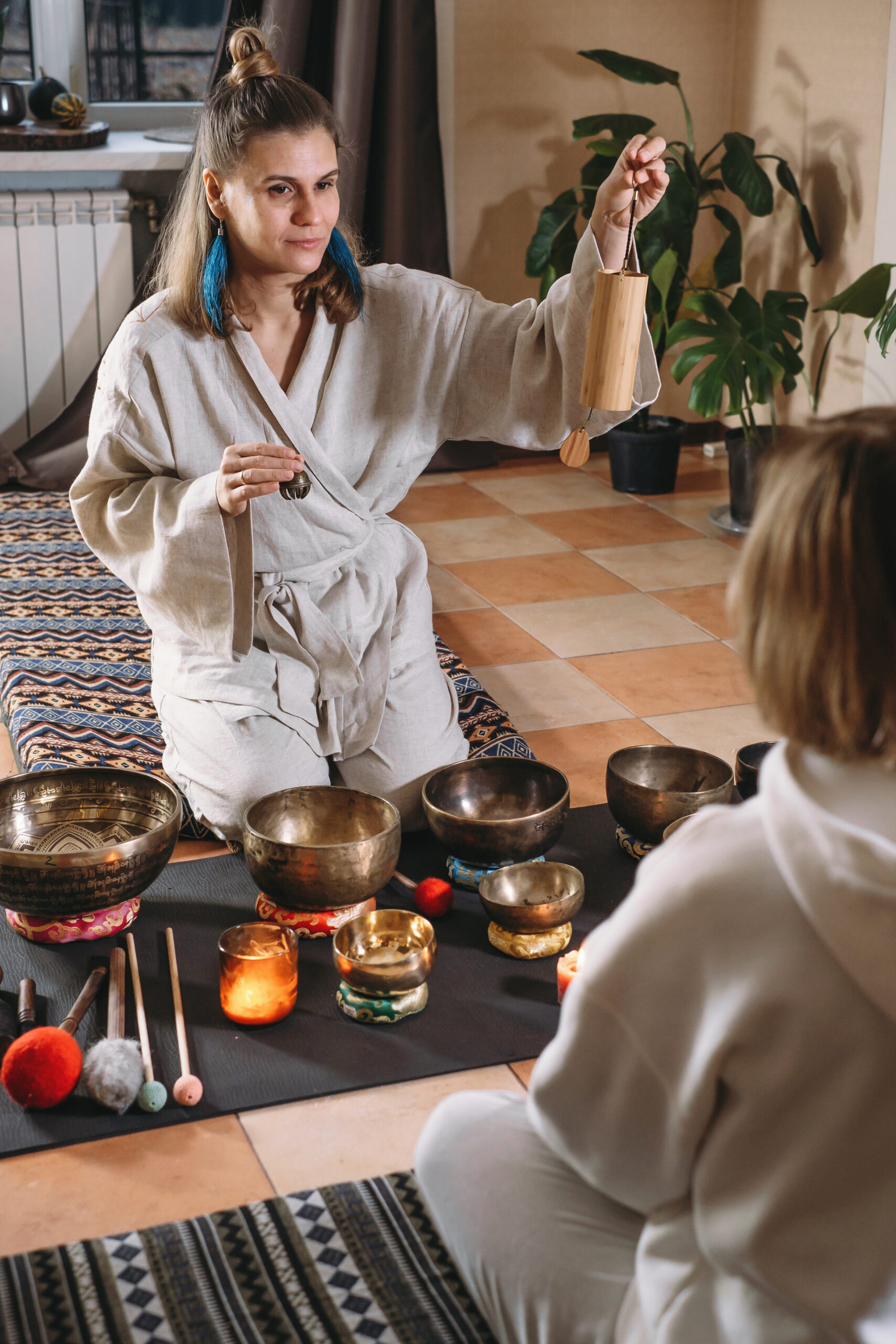
This relationship between rhythm, attentive listening, and breathing is often reflected in sound healing therapy. Singing bowls, gongs, chimes, drums, and other instruments may be used at an unhurried pace, allowing individual sounds to develop fully before the session moves forward.
Why Slow Rhythms Feel Different from Continuous Sound
A rapid sequence of sounds gives the listener a lot to process. Slower rhythms create a different experience because each tone has more room around it.
In a sound healing session, a singing bowl might be struck once and allowed to fade before another instrument is introduced. A drum might establish a simple repeated pattern rather than a complex beat.
This pacing gives the session structure without constantly introducing something new.
It also changes the role of listening. Instead of sound becoming background noise, individual tones become easier to follow from beginning to end.
Breathing Does Not Need to Follow the Beat
Sound healing and breathing can exist together without being synchronized.
While listening to a long singing bowl tone, someone might suddenly become aware of an exhale. During a pause, they might notice the movement of the chest or abdomen. A slow drum pattern may make the natural pace of breathing more noticeable.
None of this requires counting breaths or trying to inhale at a particular moment.
That distinction matters. Sound can act as a point of attention while breathing remains comfortable and natural. For people who do not enjoy structured breathing exercises, this can offer a simpler way to bring awareness to the breath.
One Session Can Contain Several Different Sound Experiences
The instruments used in sound healing therapy do not all serve the same purpose.
Singing bowls create sustained tones that gradually change as they fade. Gongs can produce broader layers of vibration, ranging from subtle sounds to fuller tones depending on how they are played.
Chimes and bells introduce shorter, clearer notes that can contrast with deeper instruments. Drums add repetition and make rhythm more noticeable.
A sound therapist may move between these instruments throughout a session rather than playing everything together.
The result can be a progression of different listening experiences: sustained sound, rhythmic patterns, lighter tones, deeper vibrations, and periods with very little sound at all.
Silence Is Not an Empty Part of Sound Healing
One of the more distinctive elements of sound healing is what happens after an instrument stops being played.
The sound may continue for several seconds before becoming too soft to hear. Instead of immediately replacing it, the practitioner can leave a pause.
That pause changes how the next sound is experienced.
A chime following silence may seem clearer. A deeper gong tone may feel more noticeable after several quiet moments. The contrast gives each instrument its own space within the session.
Silence, in this sense, is not simply the absence of sound. It helps define the rhythm and pacing of the overall experience.
Sound Can Become an Anchor for Wandering Attention
A quiet room does not automatically create a quiet mind.
Someone may sit down intending to rest and immediately begin thinking about work, responsibilities, conversations, or plans for the next day.
Sound provides a specific place to redirect attention.
Rather than trying to stop thoughts, the listener can follow the changing tone of a bowl or notice the next beat of a drum. If attention wanders, another sound provides a natural point of return.
This is one reason people may incorporate sound into meditation or mindfulness routines. Among the commonly discussed sound healing benefits is its ability to provide a structured listening experience without requiring complicated instructions.
Where Sound Healing for Anxiety Fits
People searching for sound healing for anxiety may be interested in an activity that gives them intentional time away from everyday stimulation.
During a session, there is usually little to perform or accomplish. A person may sit or lie comfortably while listening to different tones and rhythms.
For some people, having an external sound to focus on may feel more approachable than sitting in complete silence.
However, sound healing should not be viewed as a treatment or cure for anxiety disorders. Persistent anxiety, panic attacks, or symptoms affecting everyday life should be discussed with an appropriate mental health professional.
Sound healing is better approached as a complementary wellness practice rather than a replacement for professional care.
More Sound Is Not Necessarily Better
An effective sound healing session does not need to fill every second with instruments.
The experience might begin with a few individual bowl tones before moving toward deeper gong sounds. Chimes could introduce a lighter transition, while a slow drum pattern may add rhythm later in the session.
The important element is not the number of instruments but how they are used.
Volume, timing, pauses, and transitions all influence the listening experience. Giving each sound enough space can prevent different tones from competing with one another.
This is where the choices of a sound therapist become particularly noticeable. The practitioner is not simply producing sounds but deciding when to introduce them and when to leave space.
Your Response to Sound Is Personal
There is no single instrument or rhythm that everyone will experience in the same way.
A deep gong may appeal to one listener while feeling too intense for another. Someone may enjoy repetitive drumming but prefer shorter periods of chimes. Others may feel most comfortable with singing bowls and plenty of silence.
Personal preference is therefore an important part of sound healing.
Notice which tones you enjoy, which volumes feel comfortable, and whether you prefer sustained sounds or recognizable rhythms. These observations can help you understand what kind of sound-based practice suits you.
Let the Rhythm Have Room to Unfold
Slow rhythms bring a different quality to sound healing because they allow each part of the experience to stand on its own. A tone can develop before it fades. Silence can remain for a moment. Breathing can continue without being forced to match a beat.
Together, these elements create an experience centered on listening rather than constant stimulation.
Book Your Sound Healing Session at Cosmicx Healing Art
Book your session with Cosmicx Healing Art and experience how singing bowls, rhythmic sounds, vibrations, and carefully placed pauses come together in a guided sound healing setting.
Ready to experience Sound healing in Delhi? Schedule your session with Cosmicx Healing Art today and experience sound-based wellness beyond simply reading about it.
Frequently Asked Questions
1. Does sound healing help in reducing headaches?
Some people may find gentle sounds comfortable while resting, but sound healing should not be considered a treatment for headaches. Frequent, severe, sudden, or unexplained headaches should be discussed with a healthcare professional.
2. Can sound healing be practiced on a daily routine?
Sound-based practices can be included in a daily wellness routine if the volume and type of sound feel comfortable. A personal practice might involve spending a short period listening to singing bowls, chimes, or other preferred sounds
3. Who should avoid sound healing?
People who experience discomfort from loud sounds, particular frequencies, or strong vibrations should be cautious. Anyone with significant sound sensitivity, hearing concerns, or relevant health conditions should seek appropriate professional guidance before participating.
4. Can sound healing help with emotional trauma?
Sound healing may provide a setting for quiet reflection, but it should not replace professional care for emotional trauma. Trauma-related concerns should be addressed with a qualified mental health professional. Sound-based practices may be considered alongside appropriate care when they feel suitable for the individual.